OpenAI says its Jalapeño chip can power faster AI responses than the competition
# OpenAI says its Jalapeño chip can power faster AI responses than the competition What Happened OpenAI announced the commercial deployment of its first custom AI chip, Jalapeño, according to a blog post published on Tue…
Last updated: October 5, 2026
What Happened
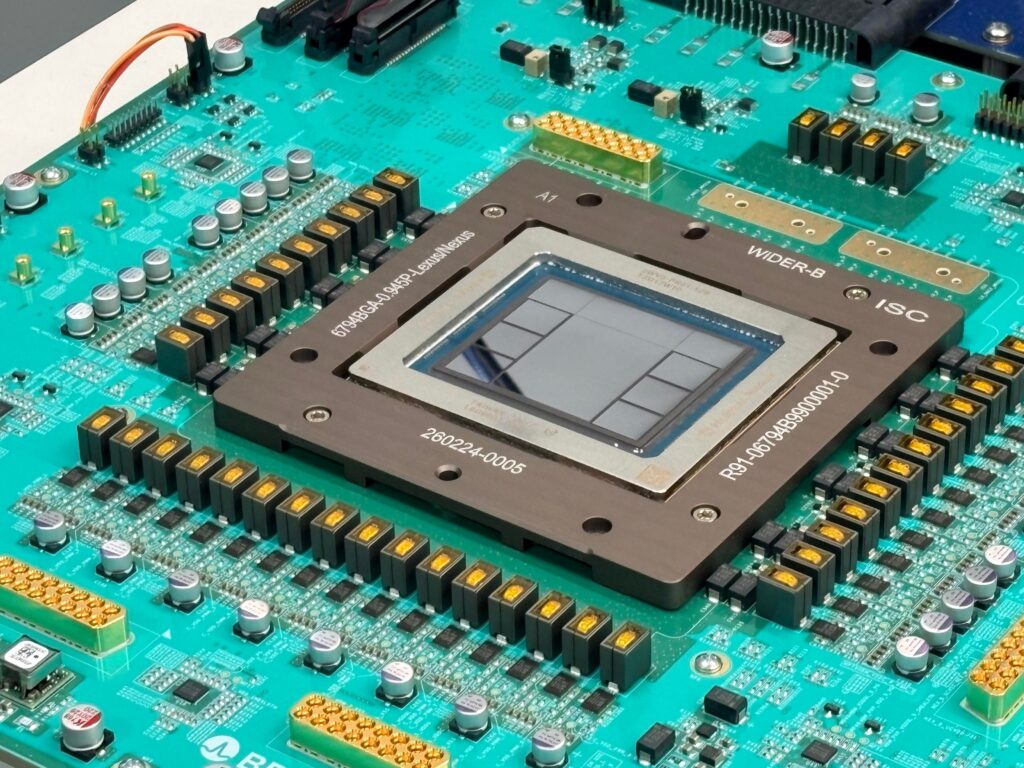
OpenAI announced the commercial deployment of its first custom AI chip, Jalapeño, according to a blog post published on Tuesday. During a briefing with reporters, OpenAI hardware vice president Richard Ho stated that the Application-Specific Integrated Circuit (ASIC) delivers what he described as the
# OpenAI says its Jalapeño chip can power faster AI responses than the competition
What Happened
OpenAI announced the commercial deployment of its first custom AI chip, Jalapeño, according to a blog post published on Tuesday. During a briefing with reporters, OpenAI hardware vice president Richard Ho stated that the Application-Specific Integrated Circuit (ASIC) delivers what he described as the “best of both worlds” — lower latency and higher throughput — positioning it as a significant departure from the industry-standard trade-off between speed and efficiency.
Jalapeño is designed specifically for AI inference, the process of running a trained model to complete a task or deploy an agent. The chip was first introduced in June and is the result of a partnership with Broadcom. OpenAI frames the move as a step toward reducing its reliance on third-party GPU providers and building more tailored infrastructure for its growing user base.
Why It Matters for Businesses
For business readers, the significance lies in what this hardware shift could mean for cost, speed, and reliability. OpenAI has long operated on NVIDIA GPUs, which, while powerful, have been subject to supply constraints and pricing pressure. By building its own ASIC, OpenAI aims to offer more predictable performance and potentially lower operational costs, which could translate to more competitive pricing for enterprise customers.
The technical claims — lower latency and higher throughput — matter because they directly affect how quickly AI-powered applications respond. In customer-facing scenarios, such as chatbots or real-time data processing, reduced latency can improve user experience and enable new use cases that require near-instantaneous feedback. For internal workflows, higher throughput means more requests can be processed in a given window, which can improve efficiency for teams scaling AI automation.
OpenAI also noted that Jalapeño is built for inference, not training. This distinction is important for businesses: training is the resource-intensive process of building a model, while inference is what happens when that model is put to work. By optimizing the chip for inference, OpenAI is targeting the day-to-day operations that most businesses interact with when using AI tools.
What To Watch
One key area to monitor is how quickly other AI labs follow suit. The development of custom chips is a capital-intensive and time-consuming endeavor, but OpenAI’s public commitment may accelerate a trend toward in-house silicon across the industry. If competitors begin releasing similar infrastructure, the market could shift toward more specialized, efficient hardware ecosystems.
Another point to watch is the real-world performance of Jalapeño outside of controlled briefings. OpenAI has not yet published independent benchmark data, and the true test will be whether the claimed efficiency gains hold up under the load of diverse, real-world tasks. Businesses should also watch for any changes to OpenAI’s pricing or service tiers, as the rollout of custom hardware could eventually lead to restructured plans or new feature sets.
Finally, the broader industry response will be telling. How NVIDIA and other cloud providers adapt to this new competitive dynamic — and whether they announce their own custom chip initiatives — will shape the trajectory of AI infrastructure for the coming years.
The Bottom Line
OpenAI’s Jalapeño chip represents the company’s first major step toward owning its AI infrastructure, with the stated goal of delivering faster, more efficient inference performance. For business owners, the development signals a potential shift toward more stable pricing and improved performance for AI-powered tools, though the full impact will depend on how the technology scales and whether cost savings are passed down to users. Keeping an eye on pricing changes and performance benchmarks will be the most practical way to gauge how this hardware shift affects your operations.
Source: Original Article
Related: Anthropic CEO outlines plan to ‘pace the frontier’, Mecka AI nears $500M valuation in Sequoia-led deal amid rush for robot training data, Y Combinator’s Garry Tan wants US open-weight AI labs to ‘distill’ frontier models, too.
For more on this, see Blog.
Continue Reading
- OpenAI ends Microsoft legal peril over its $50B Amazon deal →
- Replit’s Amjad Masad on the Cursor deal, fighting Apple, and why he’d rather not sell →
- Physical AI Conference Comes to San Jose as Robotics & Autonomous AI Go Mainstream →
- China’s AI just mapped its entire renewable energy grid. Here’s why the rest of the world should pay attention →
- How C3 AI agents will automate predictive maintenance for Shell →
Related Articles
With Tabby, a former accountant is using AI to make accountants obsolete
Quick answer A former accountant has built Tabby, an AI-powered platform designed to handle real-time…

Understanding OpenAI’s Video AI Platform Sora Was Costing It $1 Million A Day: Everything You Need to Know
Quick answer Understanding OpenAI's Video AI Platform Sora Was Costing It $1 Million A Day:…
Everything Google announced at its Android Show, from Googlebooks to vibe-coded widgets
Quick answer Google's AI-first updates signal a shift toward more intuitive, business-ready tools that can…
Stay Ahead in AI Automation
Get the latest AI automation news, tips, and case studies delivered to your inbox weekly.
No spam. Unsubscribe anytime.